
 What's on
 Things to Do
 Plan your Visit
 Media Rules and Filming
𝐖𝐇𝐘 𝐓𝐇𝐄 𝐇𝐈𝐆𝐇 𝐂𝐎𝐔𝐑𝐓 𝐀𝐅𝐅𝐈𝐑𝐌𝐄𝐃 𝐓𝐇𝐄 𝐕𝐄𝐓𝐓𝐈𝐍𝐆 𝐀𝐍𝐃 𝐀𝐏𝐏𝐑𝐎𝐕𝐀𝐋 𝐎𝐅 𝐂𝐒𝐬 𝐀𝐅𝐓𝐄𝐑 𝐃𝐈𝐒𝐎𝐋𝐔𝐓𝐈𝐎𝐍 𝐎𝐅 𝐂𝐀𝐁𝐈𝐍𝐄𝐓 𝐃𝐔𝐑𝐈𝐍𝐆 𝐓𝐇𝐄 𝐅𝐈𝐍𝐀𝐍𝐂𝐄 𝐁𝐈𝐋𝐋 𝐏𝐑𝐎𝐓𝐄𝐒𝐓𝐒







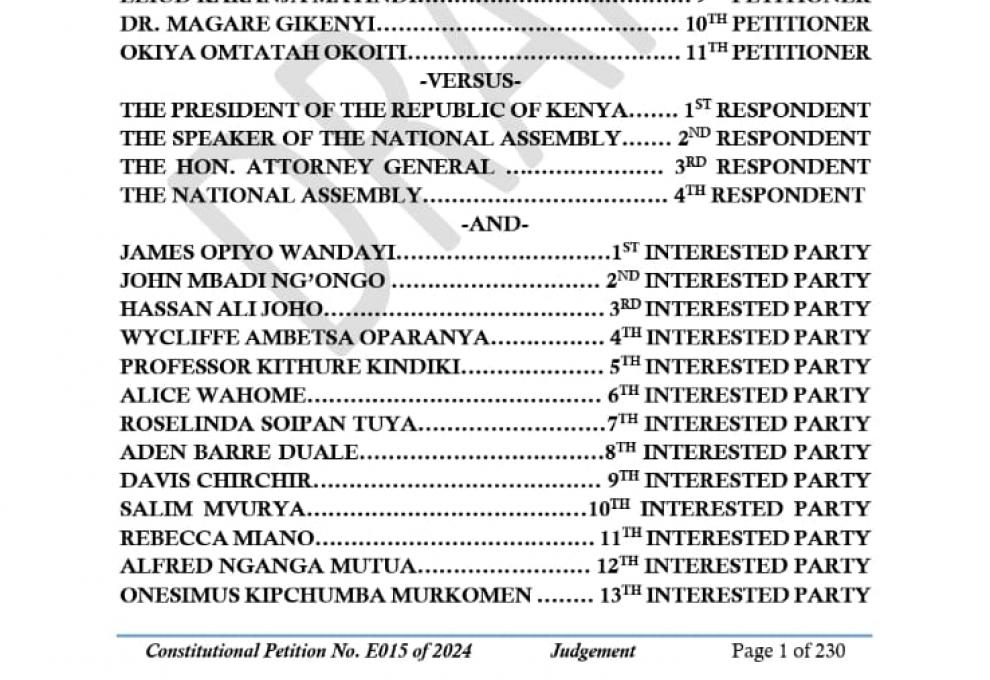
The High Court, recently dismissed a Petition that had sought to annul the current Cabinet, over queries raised on the nomination, vetting and appointment processes of the Cabinet Secretaries (CSs) following the President’s decision to dissolve Cabinet in 2024.
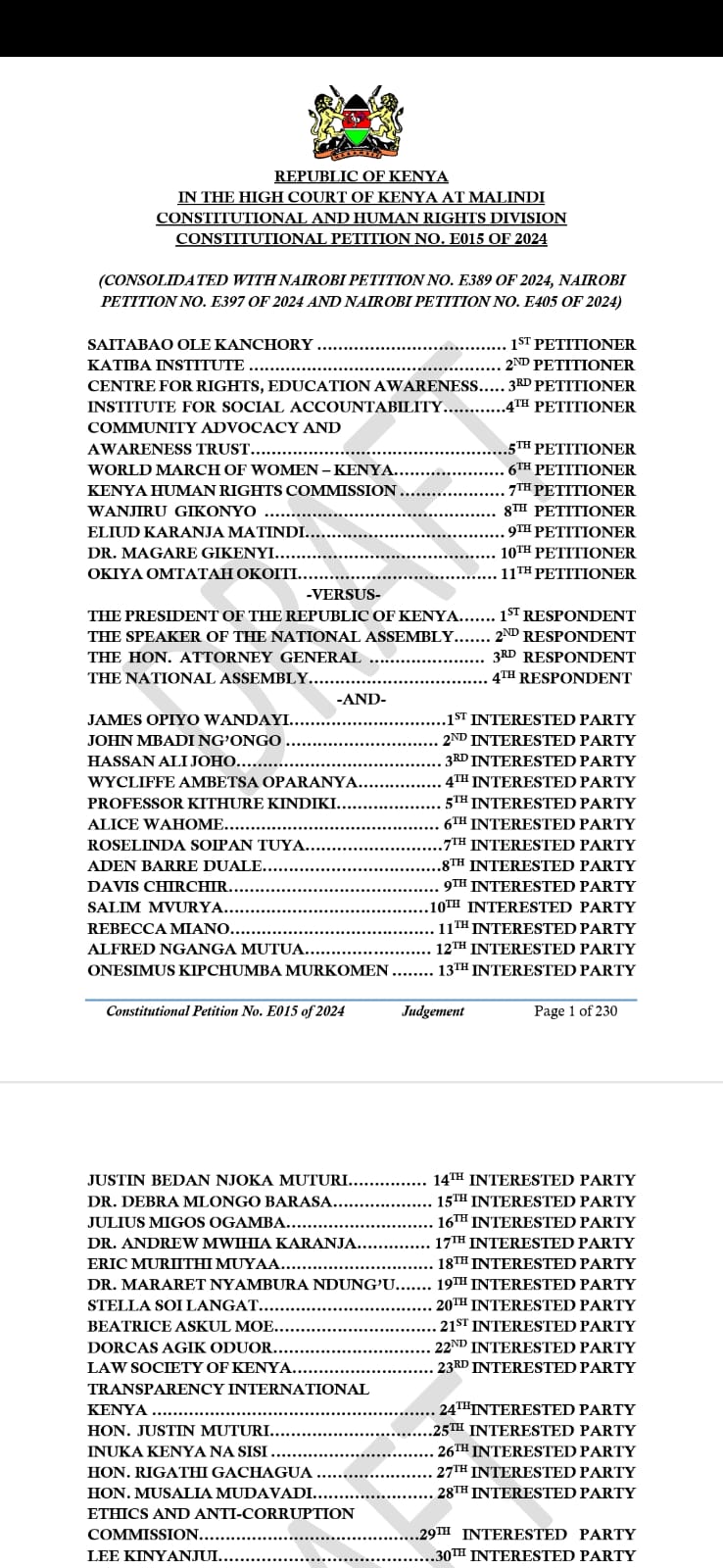
The Petitioners had among others, the President, members of his Cabinet, The Speaker of the National Assembly and the Office of the Attorney General, among others.
At the centre of the legal dispute was a contention against the decision by the President to reappoint Members of the Cabinet who had previously dismissed when he dissolved the Cabinet in 2024 at the peak of the protests against the Finance Bill that year.
Inclusion of “opposition leaders” in the President’s Cabinet had also been contended; with the Petitioners arguing that it undermined constitutional democracy and offended the structure of the Constitution.
Among the petitioners was Katiba Institute, Sen. Okiya Omutata, Mr. Saitabao Ole Kanchory, the Kenya Human Rights Commission and Ms. Wanjiru Gikonyo, the Institute For Social Accountability and the Community Advocacy and Awareness Trust, among others.
A Majority Judgement rendered by Justices Eric Ogola and Stephen Githinji; and the Minority Judgement read by Justice Jairus Ngaah clarified the scope of Presidential appointments in regard to the Cabinet and rea-affirmed the mandate of the National Assembly in the vetting and approval of the same.
Regarding the question of reappointment of CSs who the President had previously dismissed, the Majority bench held that the dismissal under Article 152(5)(b) had not automatically rendered the CSs ineligible for future appointment.
The bench further clarified that the Court did not find any violation of Chapter Six (Articles 75-78) was made against any individual and stated that dissolution was a political and administrative reorganization, not a disciplinary measure.
In his minority Judgement, Justice Ngaah, opined that where an office holder has been removed on grounds of incompetence or poor performance, such circumstances may negate the qualification necessary for reappointment, particularly where H.E. the President’s own statement expressly acknowledged that the Cabinet’s performance had fallen below the required standard.
The Bench unanimously held that the National Assembly had substantially complied with the constitutional requirements on public participation in the approval process.
The Petitioners had accused the National Assembly of conducting a constitutionally deficient public participation exercise; citing allocation of allegedly short period for participation, provision of inadequate information and alleged exclusion of a number of objections submitted with regard to the suitability of some of the CS nominees.
The said memoranda, had been struck out by the National Assembly Committee on Appointments over failure to comply with the House guidelines of submission by way of written statements on oath (affidavits).
The Court agreed with the National Assembly that the requirement for objections to be submitted on oath is a legitimate procedural safeguard that promotes accountability and ensures that allegations presented during parliamentary approval hearings are verified and supported by evidence.
Regarding the scope of public participation, the Court, ruled that adequate notice had been given through various public platforms and a reasonable opportunity for participation afforded.
On the question of inclusion of leaders affiliated to the “Opposition” to the cabinet, the majority bench ruled that political affiliation is not a constitutional disqualification for appointment adding that the Constitution does not recognize an official opposition as a constitutional institution.
They that the constitutional framework is founded on the separation of powers, institutional checks and balances and the roles of Parliament, the Executive, the Judiciary, independent commissions, constitutional offices and the Bill of Rights, rather than on a formal distinction between governing and opposition parties.
Justice Ngaah, however, held a divergent view on this arguing that although the Constitution recognizes Kenya as a multi-party democratic State under Article 4(2), the participation of political parties in government must be undertaken in accordance with the legal framework established by the Political Parties Act.
He held that the Act provides only two lawful mechanisms for such participation, namely coalition agreements under Section 10 and party mergers under Section 11.
The Bench, however, unanimously agreed with the Petitioners that the Cabinet as presently constituted does not comply with Article 27(8) of the Constitution because more than two-thirds of its members are of the same gender.
The Court thus directed appointing authority (H.E. The President) to make appointments of Cabinet Secretaries in conformity with Article 27(8) of the Constitution within 120 days from the date of Judgment.