
 What's on
 Things to Do
 Plan your Visit
 Media Rules and Filming
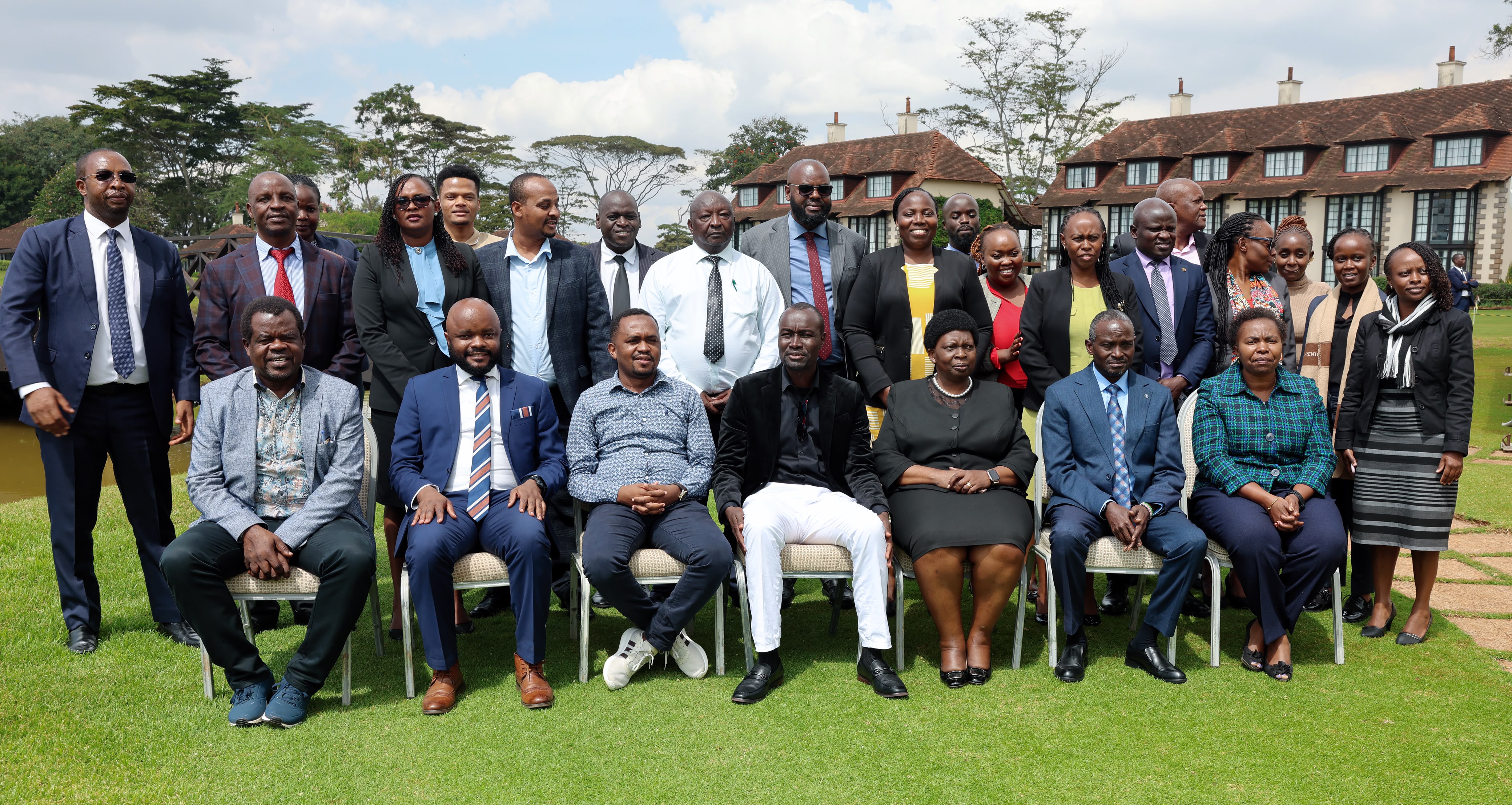
𝐒𝐄𝐍𝐀𝐓𝐄 𝐂𝐎𝐌𝐌𝐈𝐓𝐓𝐄𝐄 𝐄𝐍𝐆𝐀𝐆𝐄𝐒 𝐊𝐄𝐘 𝐒𝐓𝐀𝐊𝐄𝐇𝐎𝐋𝐃𝐄𝐑𝐒 𝐎𝐍 𝟐𝟎𝟐𝟕 𝐄𝐋𝐄𝐂𝐓𝐈𝐎𝐍 𝐏𝐑𝐄𝐏𝐀𝐑𝐄𝐃𝐍𝐄𝐒𝐒


The Senate Committee on Justice, Legal Affairs and Human Rights has on Friday, 11th June 2026 engaged key electoral stakeholders on the state of preparedness and proposed legal reforms ahead of the 2027 General Election.
The meeting held in Kiambu County and chaired by Committee Chairperson Sen. Wakili Hillary Sigei, brought together teams from the Judiciary Committee on Elections, the Office of the Registrar of Political Parties and the Independent Electoral and Boundaries Commission to brief Senators on institutional readiness, reform proposals and operational priorities.
Sen. Sigei said the engagement was intended to ensure that electoral reforms are considered early enough to support credible, lawful and well-administered elections.
“The Committee is keen to ensure that all proposals touching on the 2027 General Election are processed in good time. Electoral reforms must not come too late, because late reforms create uncertainty for institutions, candidates and voters,” said Sen. Sigei.
Justice Francis Tuiyott, who led the Judiciary Committee on Elections team, said the Judiciary had adopted an early preparedness approach focused on timely and credible resolution of election disputes.
“The Judiciary is preparing early because election dispute resolution is time-sensitive and central to public confidence in the democratic process. Our focus is to strengthen case management, capacity building, technology use and stakeholder coordination before the country enters the full election cycle,” said Justice Tuiyott.
The Judiciary team presented proposals touching on election dispute resolution, alternative dispute resolution, appellate procedures, review powers of election courts and enhanced resourcing for the Judiciary during election periods.
On behalf of the Office of the Registrar of Political Parties, Mr. John Cox Lorionokou said the ORPP’s preparations are anchored on strengthening party registration, party lists, digital membership systems, compliance monitoring and political party dispute prevention.
“Political parties are the gateway to elections. If party nominations, membership registers and coalition arrangements are not clear and credible, the pressure moves to tribunals, courts and the electoral system,” said Mr. Lorionokou.
The ORPP team also presented proposed amendments to the Political Parties Act, including reforms on party nominations, coalitions, voluntary dissolution of political parties, party switching, internal party democracy and the use of technology in party processes.
IEBC, led by Ruth Kulundu, briefed the Committee on electoral planning, continuous voter registration, election operations, voter education, technology infrastructure and stakeholder engagement.
“The Commission remains on course in its preparations for the 2027 General Election. Our priority is to strengthen voter registration, improve operational systems, enhance civic education and work with stakeholders to deliver a credible, transparent and inclusive electoral process,” said Ms. Kulundu.
The Sigei-led Committee is expected to consider the submissions and legislative proposals received from the stakeholders as part of its work on electoral reforms and preparedness ahead of the 2027 General Election.