 What's on
 Things to Do
 Plan your Visit
 Media Rules and Filming
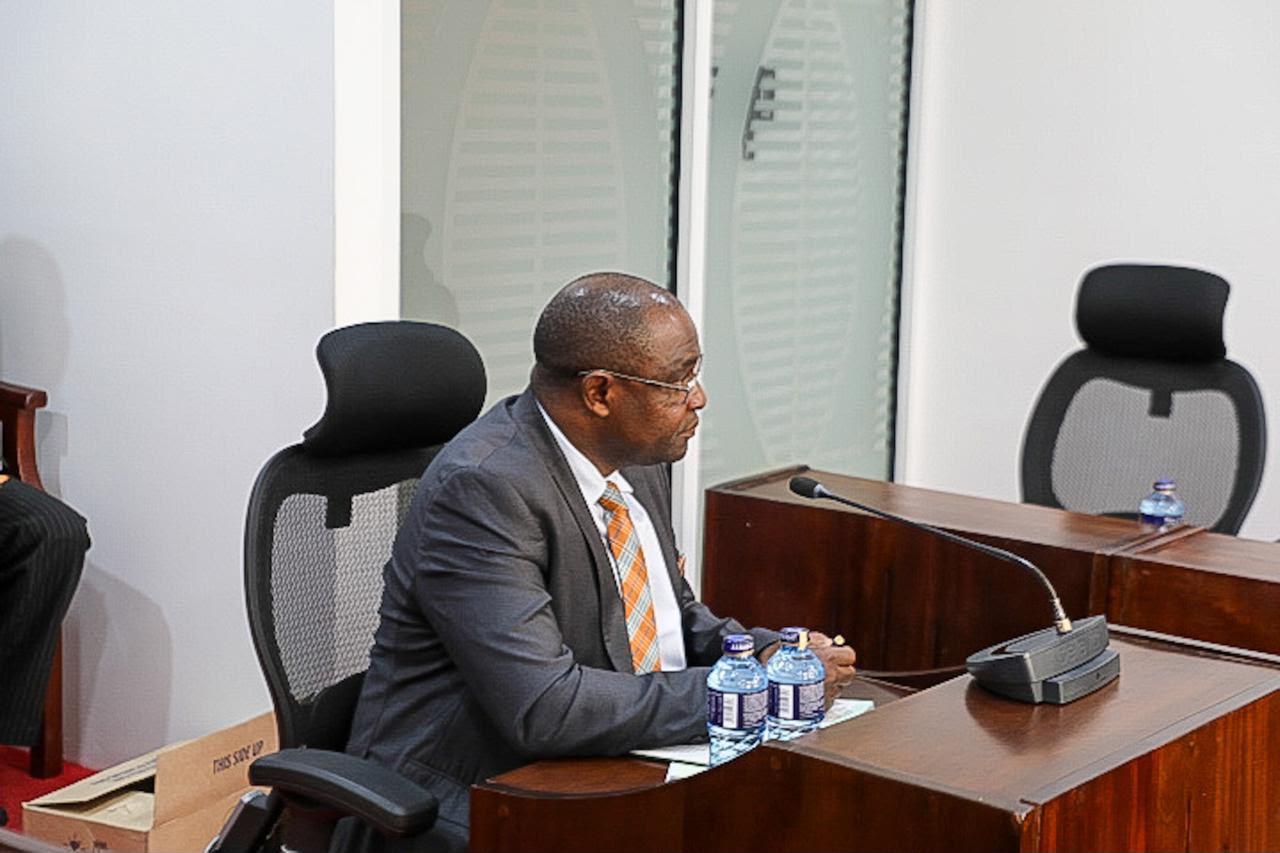
𝐒𝐄𝐍𝐀𝐓𝐄 𝐂𝐎𝐌𝐌𝐈𝐓𝐓𝐄𝐄 𝐒𝐄𝐄𝐊𝐒 𝐀𝐒𝐒𝐔𝐑𝐀𝐍𝐂𝐄𝐒 𝐎𝐍 𝐒𝐀𝐅𝐄𝐓𝐘, 𝐂𝐎𝐌𝐌𝐔𝐍𝐈𝐓𝐘 𝐁𝐄𝐍𝐄𝐅𝐈𝐓𝐒 𝐀𝐍𝐃 𝐄𝐍𝐕𝐈𝐑𝐎𝐍𝐌𝐄𝐍𝐓𝐀𝐋 𝐏𝐑𝐎𝐓𝐄𝐂𝐓𝐈𝐎𝐍 𝐅𝐎𝐑 𝐏𝐑𝐎𝐏𝐎𝐒𝐄𝐃 𝐒𝐈𝐀𝐘𝐀 𝐍𝐔𝐂𝐋𝐄𝐀𝐑 𝐏𝐎𝐖𝐄𝐑 𝐏𝐋𝐀𝐍𝐓







The Senate Standing Committee on Energy has intensified its oversight of Kenya’s proposed Nuclear Power Project in Siaya County after seeking detailed assurances from the Nuclear Power and Energy Agency (NuPEA) on project safety, environmental safeguards, community participation, financing, regulatory preparedness and socio-economic benefits.
The Committee, chaired by Sen. Oburu Oginga, received comprehensive responses from NuPEA on concerns raised by Members regarding the country’s preparedness to implement its first nuclear power programme and the measures being taken to protect host communities and the environment.
Among the key issues discussed was the status of site characterization and engineering studies undertaken in Siaya County.
NuPEA CEO Justus Wabuyabo informed Senators that following extensive regional assessments and screening of potential locations, Lenya Village had been identified as the preferred site for Kenya’s first Nuclear Power Plant.
The Agency noted that the preferred and alternate sites will undergo detailed characterization before any licensing and construction approvals are granted.
The Committee also sought clarification on the roadmap towards the projected March 2027 groundbreaking date.
NuPEA outlined several milestones that must be achieved before construction begins, including land acquisition, completion of environmental and social impact assessments, financing arrangements, vendor selection, licensing documentation and institutional preparedness involving all relevant government agencies.
Sen. Boni Khalwale sought assurances on the social infrastructure that would accompany the multibillion-shilling investment, asking whether NuPEA would assist the County Government of Siaya to establish a Level 5 hospital capable of responding to emergencies associated with such a major project.
The Senator also sought clarification on the project’s financing model, asking whether it would be funded through the Exchequer or strategic partnerships.
He further questioned the legal mechanisms the Agency had put in place to mitigate legal liability and risk, the number of people likely to be displaced, the acreage of land required for the project, and the framework for land compensation and resettlement of affected persons.
Hon. Otiende Amollo, a friend of the committee on raised concerns over the level of public participation undertaken so far, saying a project of such magnitude required extensive public engagement.
“This kind of a project requires extensive public participation which has never been undertaken. I have only engaged in just one meeting, which was the inaugural meeting,” he said.
The Rarieda MP added that he was unaware of the exact project site and urged the Agency to satisfactorily address scientific concerns associated with nuclear energy.
“Historically, nuclear power has not been associated with very good results. The scientific concerns need to be answered satisfactorily,” he observed.
Hon. Amollo further emphasized that environmental safeguards must remain paramount, noting that Lake Victoria supports millions of livelihoods across the region. While compensation for affected residents was important, he argued that resettlement deserved equal consideration because many communities in the area live as clans whose social fabric could be disrupted through relocation. He also sought clarification on the direct benefits that Siaya residents would derive from hosting the project, including whether a portion of the electricity generated would be reserved for the county.
Hon. Ochanda questioned the feasibility of the proposed March 2027 groundbreaking, arguing that site characterization alone could take close to a year to complete.
He urged NuPEA to prioritize project milestones to avoid undertaking costly technical studies before establishing whether the land was suitable for development. He also sought clarity on where NuPEA’s mandate ends and KenGen’s responsibilities begin.
Responding to Members’ concerns, NuPEA explained that the Agency is responsible for coordinating Kenya’s nuclear power programme, while the Kenya Nuclear Regulatory Authority (KNRA) is the independent regulator responsible for licensing and oversight. KenGen, on the other hand, will be the owner-operator responsible for developing, constructing and operating the plant.
The Agency also updated Senators on Kenya’s progress towards accession to four international nuclear safety conventions, revealing that Cabinet approved the conventions on June 30, 2026, and that they are now awaiting consideration by the National Assembly.
Chairperson Sen. Oburu Oginga emphasized that while safety remains Parliament’s foremost concern, Kenya should also focus on the immense opportunities presented by nuclear energy.
“Although nuclear power is cheaper, our concern is about safety to avoid accidents caused by nuclear reactors. Let us not emphasize the negatives but focus on the positive attributes of nuclear power,” he said.
The Senator expressed optimism that the project would become a reality, adding:
“In my lifetime, I hope to see nuclear power implemented in Siaya County.”
Sen. Lomenen acknowledged the high capital cost of nuclear power plants but proposed that community leaders be taken on study tours to countries with operational nuclear facilities in Europe, Asia and America to enable them to understand how the technology operates and its impact on surrounding communities.
Responding to Members, NuPEA Chief Executive Officer Justus Wabuyabo assured the Committee that the global nuclear industry has significantly advanced its safety systems.
“Today, a nuclear plant cannot leak because of the safeguards put in place,” he said.
Mr. Wabuyabo explained that operators of nuclear power plants worldwide share knowledge through international forums to continuously improve safety standards and operational excellence.
He noted that nuclear power plants require relatively small parcels of land compared to other energy sources, observing that a facility capable of producing 2,000 megawatts occupies far less land than hydropower projects of similar capacity.
The CEO further stated that while the lifespan of a nuclear power plant is estimated at about 100 years, the initial investment can be recovered within approximately 20 years, allowing the country to benefit from decades of affordable electricity thereafter.
He also assured the Committee that NuPEA would facilitate scientific tours for opinion leaders and community representatives to countries operating nuclear power plants to enhance public understanding and confidence in the technology.
Addressing concerns about geological safety, NuPEA Nuclear Engineer Ohaga informed the Committee that the Agency had eliminated sites susceptible to volcanic activity and earthquakes during the screening process, ensuring that only technically suitable locations remained under consideration.
On environmental protection, NuPEA reiterated that safeguarding Lake Victoria remains central to the project. The Agency stated that comprehensive Environmental and Social Impact Assessments will be undertaken before licensing, including studies on radiological safety, fisheries, aquatic ecosystems, thermal effects and transboundary impacts involving Uganda and Tanzania.
Regarding land acquisition, the Agency maintained that no household would be displaced without prior, fair and prompt compensation in accordance with the Constitution and Kenyan law, adding that KenGen will implement an approved resettlement and compensation framework to safeguard the rights of project-affected persons.
NuPEA further informed the Committee that the proposed project is expected to cost approximately KSh500 billion and create between 5,000 and 12,000 jobs during construction, with priority to be given to local employment, skills development and participation of Siaya businesses in the project’s supply chain.
The Senate Standing Committee on Energy reaffirmed its commitment to ensuring that Kenya’s nuclear energy programme adheres to the highest standards of safety, environmental stewardship, transparency and public accountability while delivering meaningful socio-economic benefits to host communities.