
 What's on
 Things to Do
 Plan your Visit
 Media Rules and Filming
𝐒𝐄𝐍𝐀𝐓𝐄 𝐏𝐔𝐒𝐇𝐄𝐒 𝐅𝐎𝐑 𝐄𝐍𝐇𝐀𝐍𝐂𝐄𝐃 𝐄𝐂𝐃𝐄 𝐀𝐍𝐃 𝐓𝐕𝐄𝐓 𝐈𝐌𝐏𝐋𝐄𝐌𝐄𝐍𝐓𝐀𝐓𝐈𝐎𝐍 𝐀𝐒 𝐊𝐈𝐑𝐈𝐍𝐘𝐀𝐆𝐀 𝐀𝐏𝐏𝐄𝐀𝐑𝐒 𝐁𝐄𝐅𝐎𝐑𝐄 𝐄𝐃𝐔𝐂𝐀𝐓𝐈𝐎𝐍 𝐂𝐎𝐌𝐌𝐈𝐓𝐓𝐄𝐄







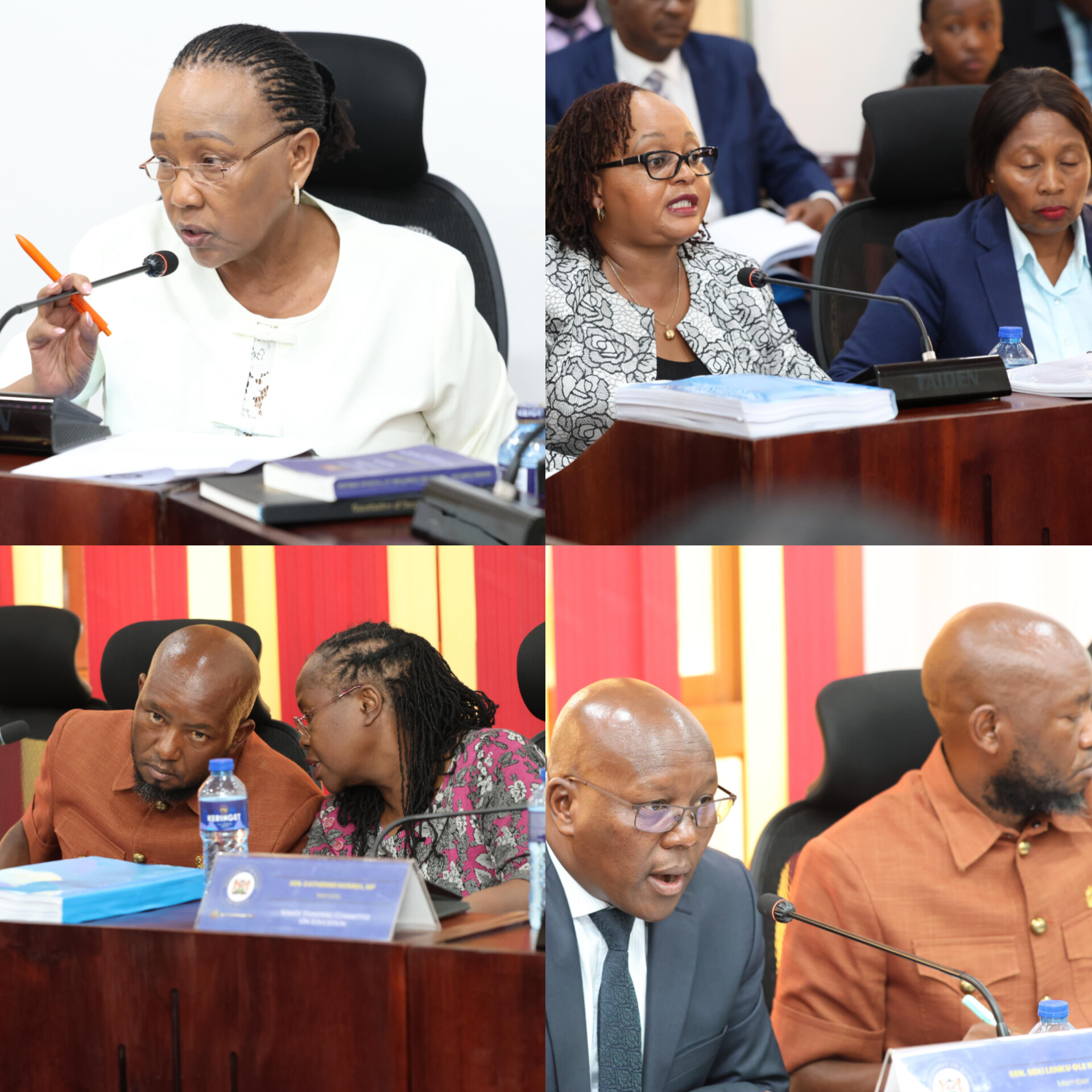
The Senate Committee on Education, Chaired by Sen. Betty Montet, today held a consultative meeting with H.E. Governor Anne Waiguru and the Kirinyaga County Executive Team to deliberate on the status of Early Childhood Development Education (ECDE) and Vocational Training Centres (VTCs) within the County.
The engagement forms part of the Committee’s ongoing nationwide assessment of ECDE and Technical and Vocational Education and Training (TVET) implementation across all 47 counties in fulfilment of its oversight mandate.
In her opening remarks, Chairperson Sen. Betty Montet noted that the Committee has so far engaged 32 counties, with the Kirinyaga session marking the Committee’s 33rd county engagement in the ongoing exercise.
Governor Waiguru, accompanied by Acting Chief Officer for Education Ms. Rose Wachira and Acting CECM for Education Ms. Millicent Ngari, presented a comprehensive briefing outlining progress made, key challenges experienced, and reforms being undertaken within Kirinyaga County’s ECDE and vocational training sector.
The Committee was informed that Kirinyaga County currently has 372 ECDE centres, comprising 202 public centres and 170 private centres, serving a total of 24,499 learners across the five sub-counties. Of the total enrollment, boys account for 50.8% while girls make up 49.2%, reflecting relatively balanced gender parity in ECDE access within the County.
On staffing levels, the County reported that the teacher-pupil ratio currently stands at 1:30 in public ECDE centres and 1:20 in private institutions. Public ECDE centres have an enrolment of 14,361 learners supported by 482 teachers, while private centres serve 10,138 learners with 510 teachers.
The County Government also highlighted reforms undertaken in the management of ECDE teachers. Following the establishment of county governments, all 426 ECDE teachers previously employed by parents were absorbed on contract terms by the County Government. Further, during FY 2022/2023, 410 ECDE teachers were transitioned from casual employment to permanent and pensionable terms, with salaries increasing from approximately KSh 11,000 to KSh 22,000 for the lowest paid teachers, while the highest-paid teachers rose from KSh 15,000 to KSh 49,570. An additional 66 teachers have since been recruited to replace those exiting through natural attrition.
During the session, Members of the Committee commended Kirinyaga County for several initiatives within the ECDE sector. Sen. Catherine Mumma applauded the County for the structured presentation of its report, noting,“I commend Kirinyaga County on the manner in which they have presented their report. I also commend the County on the salary scales for ECDE teachers and the provision of free school uniforms, which is a commendable incentive to learners.”
Sen. Mumma, however, sought clarification on the County’s draft ECDE policy and the extent of stakeholder engagement undertaken. “I note that the County currently has a draft ECDE policy. Has public participation been conducted, and who constitutes the target population? It is important to establish whether every child eligible for ECDE is actually accessing school, because the ages between 0 and 7 years are critical in shaping the nation during the formative stages of child development,” she observed.
The Senator further raised concerns regarding ECDE infrastructure within primary school compounds and the protection of young learners. “How many ECDE centres were established prior to devolution, and does the County have Memoranda of Understanding with primary schools to safeguard the interests and safety of ECDE learners?” she posed.
On infrastructure and accessibility, the County indicated that out of the 202 public ECDE centres, 195 are located within primary schools, six are stand-alone centres, while one is situated within an informal settlement scheme. Governor Waiguru noted that the County has prioritised equitable distribution of ECDE centres to enhance access for learners across all regions of Kirinyaga County.
The Committee also sought clarification on childcare facilities, with Sen. Montet observing that a majority of such centres appear to be privately owned and questioning the County’s strategy towards expanding public childcare services.
On staffing matters, Sen. Seki Lenku sought clarification regarding 11 teachers classified under “Others” in Job Group F, seeking confirmation on whether they possess the requisite teaching qualifications. In response, Governor Waiguru explained that the teachers were inherited from defunct local authorities and are currently undertaking further certification and training facilitated by the County Government.
Sen. Lenku also raised concerns regarding the absence of a school feeding programme despite provisions within the ECDE Act. Responding to the concern, Governor Waiguru attributed the situation to financial constraints, noting that while the ECDE programme initiatives had not received adequate funding, the County had not experienced acute nutritional challenges among learners. “At the moment, many parents are still able to provide nutritional meals for their children,” she stated.
Governor Waiguru further noted that while engagement of teachers through Boards of Management remains a decision undertaken at institutional level, the County acknowledges the importance of fully managing the devolved ECDE function.
In response, Chairperson Sen. Betty Montet emphasized that ECDE remains a fully devolved function and therefore requires clear county responsibility and accountability. “It is important that counties fully take charge of this mandate as we continue to distinguish functions between the National Government and County Governments,” she stated.
The Governor further informed the Committee that the County is progressively expanding ECDE infrastructure through construction of additional classrooms, while also acknowledging the absence of formal MOUs with schools. “We recognise the importance and relevance of formalising these arrangements and are considering implementation of the same,” she stated.
The Acting Chief Officer for Education informed the Committee that most childcare centres are concentrated within informal settlement areas and urban centres.
Concerns were also raised regarding sanitation facilities and infrastructure costs. Sen. Nderitu Kinyua questioned the variation in ECDE teacher-learner ratios across sub-counties and sought clarification on sanitation gaps identified during assessments conducted in 2025. He further sought to know whether school uniforms issued to ECDE learners were standardized across the County.
In response, Governor Waiguru noted that the County currently utilizes two colours — green and blue — for ECDE uniforms across Kirinyaga. She explained that although the County had initially intended to adopt four different colours for each sub-county, the proposal was not financially sustainable.
The Governor also highlighted the County’s women empowerment initiative dubbed the “Wezesha Mama Programme,” through which women are trained to make school uniforms, hospital linen, and other supplies, thereby supporting both economic empowerment and local production.
Sen. Murango, while commending the County on teacher remuneration, raised concerns regarding delays in salary remittances and disparities in teacher-learner ratios across sub-counties. “The ratio varies significantly in some areas, with figures as high as 1:60 and 1:47 in some sub-counties and this remains a concern. We must also ensure consistency in the distribution of learning materials to learners,” he stated.
The Governor attributed delays in salary remittances to delayed disbursement of funds from the Exchequer, while assuring the Committee that the County is implementing interventions such as additional teacher recruitment and infrastructure expansion to progressively improve teacher-learner ratios and equitable distribution of learning materials.
The Committee was further informed that Kirinyaga County has commenced rollout of digital learning within the ECDE sector through a partnership with Longhorn Publishers and Safaricom under the “LoHo Learning” digital platform. The pilot programme, currently being implemented in five schools across the five sub-counties, provides curriculum content aligned to the Kenya Institute of Curriculum Development (KICD). The County has already undertaken training for ECDE teachers and Heads of Institutions participating in the pilot phase.
On policy matters, Chairperson Sen. Betty Montet sought clarification on the status of the draft ECDE policy at the County Assembly, while also seeking to establish whether private childcare facilities are regulated by the County Government.
Governor Waiguru informed the Committee that the draft ECDE policy had already been submitted to the County Assembly and is currently awaiting public participation before progressing to the next stage of implementation.
The Committee also deliberated on post-training support for VTC learners, with Sen. Nderitu Kinyua inquiring whether graduates are provided with start-up tools upon completion of training. Governor Waiguru noted that while some students receive tools directly from the County Government, others benefit through support from development partners.
In her remarks, Chairperson Sen. Betty Montet commended Kirinyaga County for achieving high enrollment rates within the ECDE sector, terming it a positive indicator towards strengthening foundational learning.
In her closing remarks, Governor Waiguru thanked the Committee for the engagement and affirmed the County’s commitment towards implementing the recommendations raised during the session. “We have taken note of the areas that require improvement within ECDE and VTCs, and we look forward to continued collaboration with the Senate in making ECDE learning more accessible and effective for our children,” she concluded.