
 What's on
 Things to Do
 Plan your Visit
 Media Rules and Filming
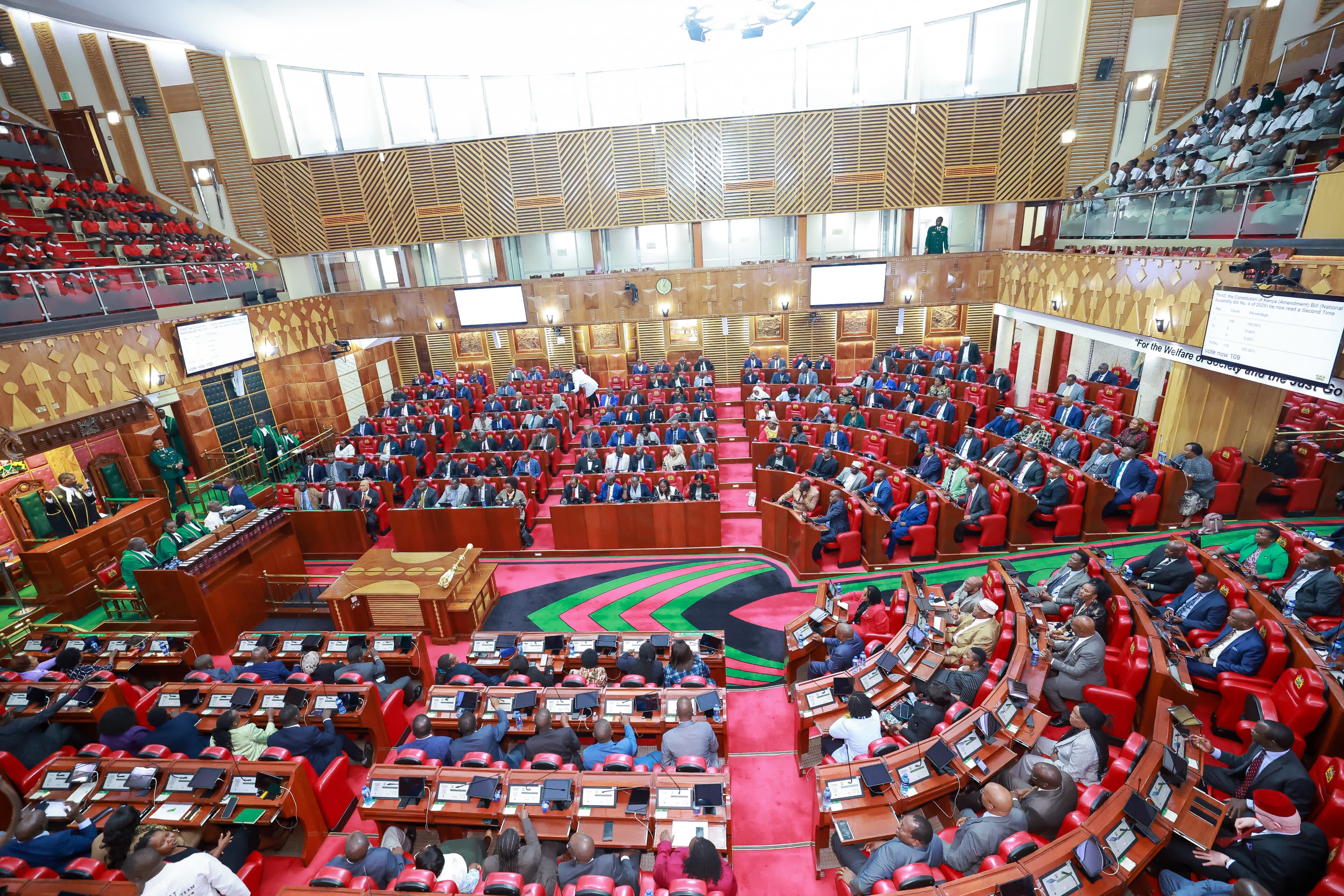
𝐋𝐀𝐖𝐌𝐀𝐊𝐄𝐑𝐒 𝐃𝐄𝐁𝐀𝐓𝐄 𝐄𝐋𝐄𝐂𝐓𝐈𝐎𝐍𝐒 𝐀𝐌𝐄𝐍𝐃𝐌𝐄𝐍𝐓 𝐁𝐈𝐋𝐋


Members of the National Assembly have raised concerns over the high cost of conducting
elections in Kenya as they debated the Elections (Amendment) (No. 2) Bill (Senate Bill No.
29 of 2024) at Second Reading.
The Bill, which is among the electoral reform measures arising from recommendations of the
National Dialogue Committee (NADCO), seeks to align the Elections Act with the
Constitution, the Political Parties Act and various court decisions.
Moving the Bill, Hon. George Murugara said it seeks to clarify the respective roles of political
parties and the Independent Electoral and Boundaries Commission (IEBC), particularly in
relation to party nominations and registration of candidates.
The Bill also seeks to address the suspension of voter registration during by elections by
limiting the suspension to the affected electoral area and barring persons who register during
the suspension from contesting in that by election.
Seconding the Bill, Majority Leader Hon. Kimani Ichung’wah said the proposed amendments
would strengthen the transmission and declaration of election results, ensuring that results
declared at polling stations remain the final results in accordance with the Constitution and
electoral laws.
However, the cost of elections emerged as a major concern during the debate.
Hon. Kimani Kuria questioned the cost of casting a vote in Kenya, noting that the 2022
election cost approximately KSh2,600 per vote, and compared this with South Africa, where
he said the cost was significantly lower.
Hon. Ichung’wah echoed the concern, asking, “What public good do we get out of these
expensive elections?” He observed that the IEBC is expected to become one of the heaviest
users of public resources in the next budget because of the forthcoming elections.
Hon. Kwenya Thuku described spending KSh50 billion on an electoral process as “self-
defeating and painful”, while questioning the reliance on expensive printed ballot papers
when other public systems have embraced technology.
“I wonder how we trust everything else but not our own processes when it comes to
elections?” questioned Hon Kwenya
Hon. Gideon Ochanda cautioned that some of the proposed amendments could increase
costs at polling stations, but welcomed the provision for continuous inspection of the voter
register.
Hon. Timothy Kipchumba said Parliament must facilitate the IEBC to conduct free, fair and
credible elections, while also calling for greater transparency in political party nominations.
Hon. Florence Jematiah raised concerns over the removal of educational qualifications for
candidates, arguing that literacy remains important for effective leadership.
“Literacy level is a very integral component of leadership, and it is one of the reasons we
have problems in executing policies,” said Hon Jematiah
The House subsequently approved the Bill at Second Reading.